












































Tram München
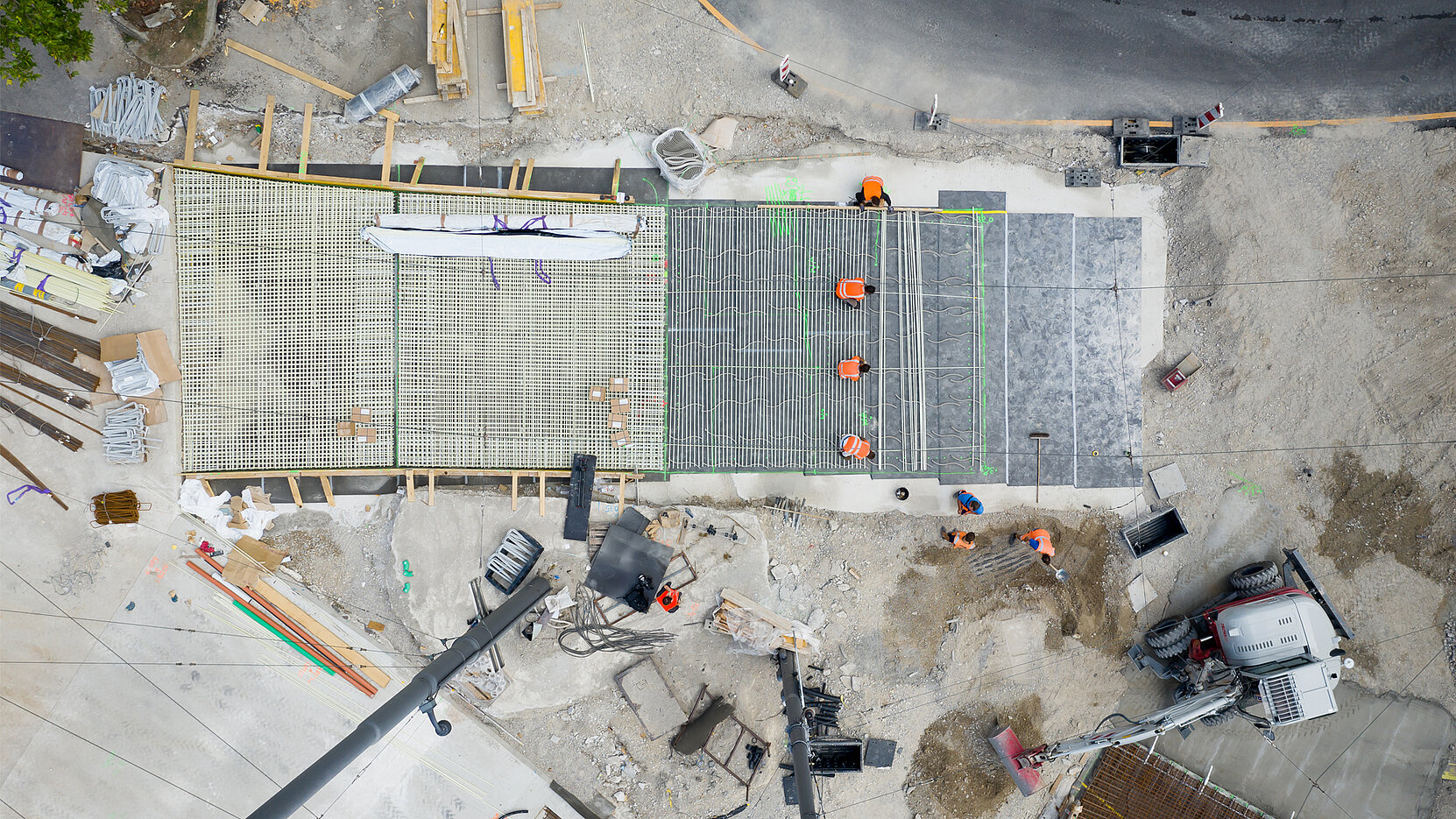
Top view of the Combar® reinforcement. Photo: Moritz Bernoully
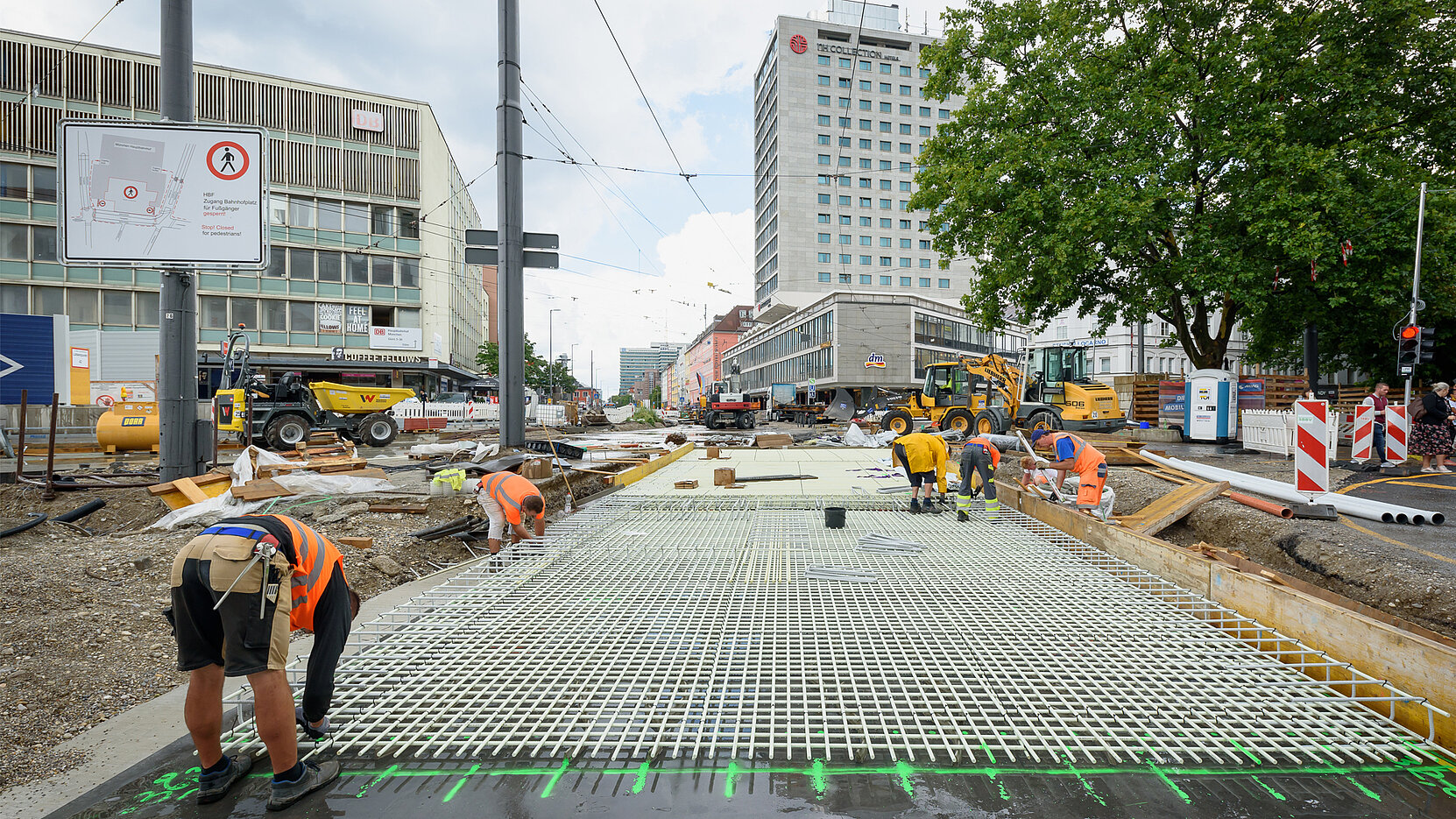
Placing the spacers to ensure the correct concrete
cover. Photo: Moritz Bernoully
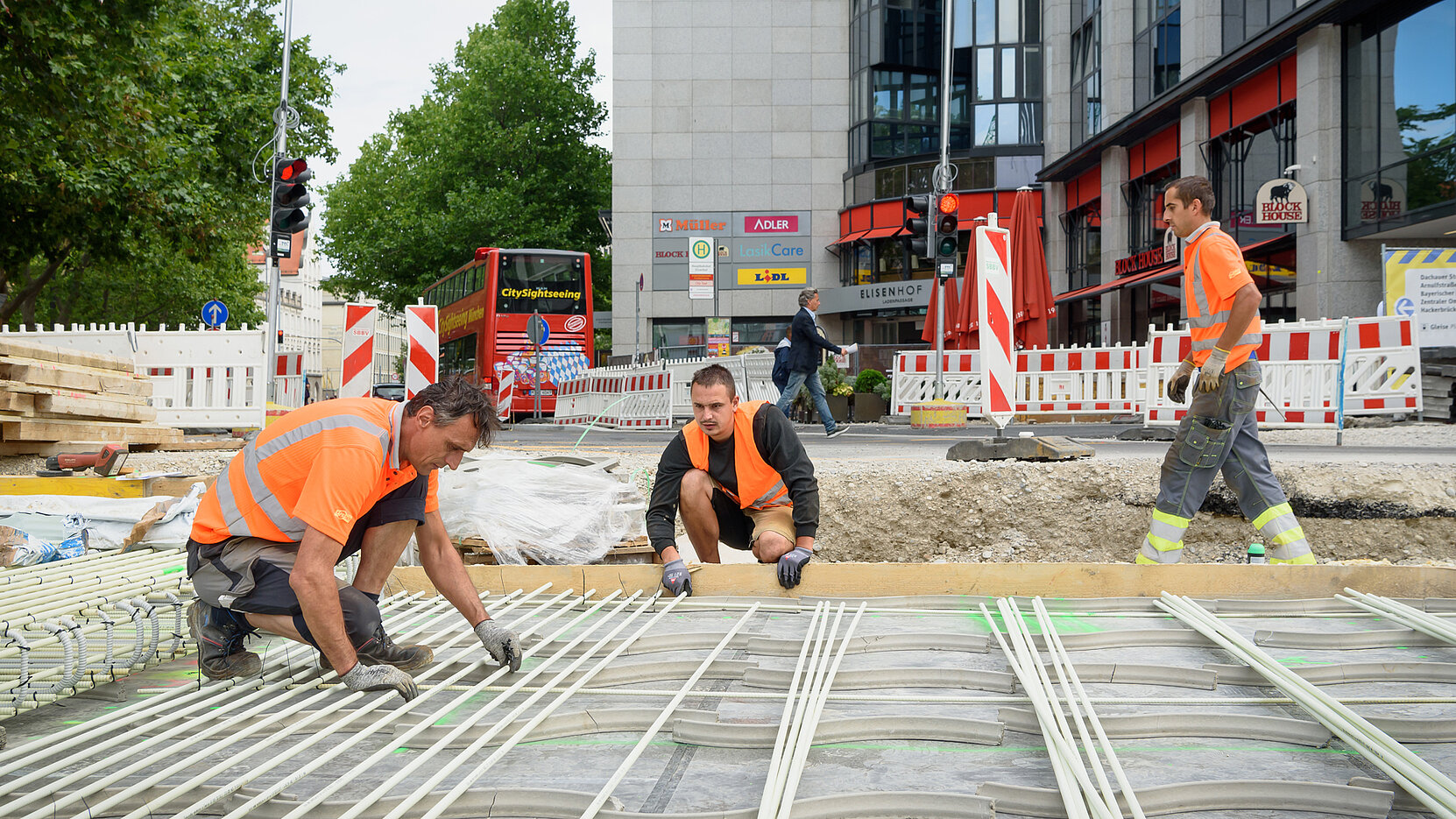
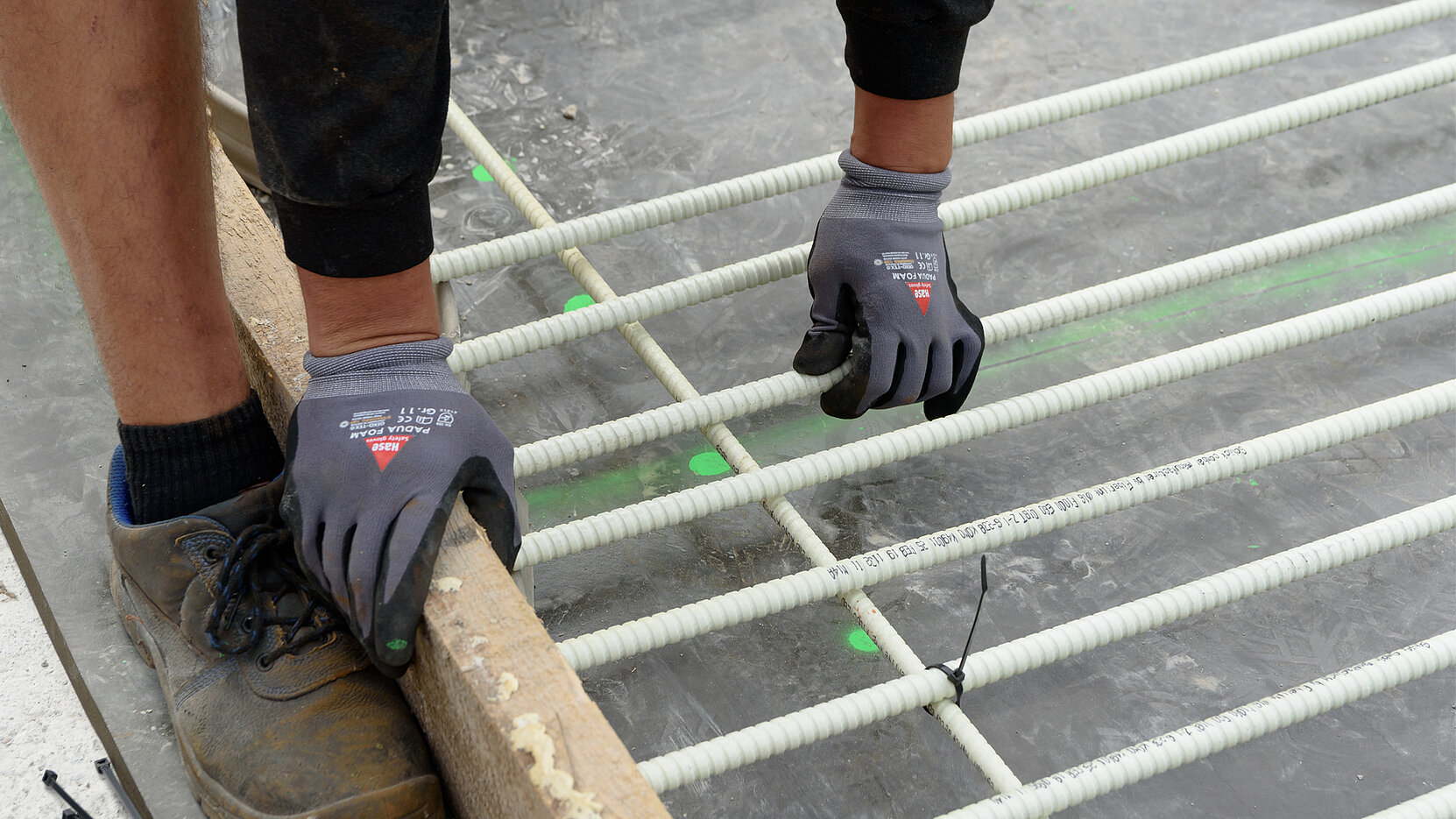
Aligning the longitudinal bars in accordance with the
spacing specified in the reinforcement plan. Photo: Moritz Bernoully
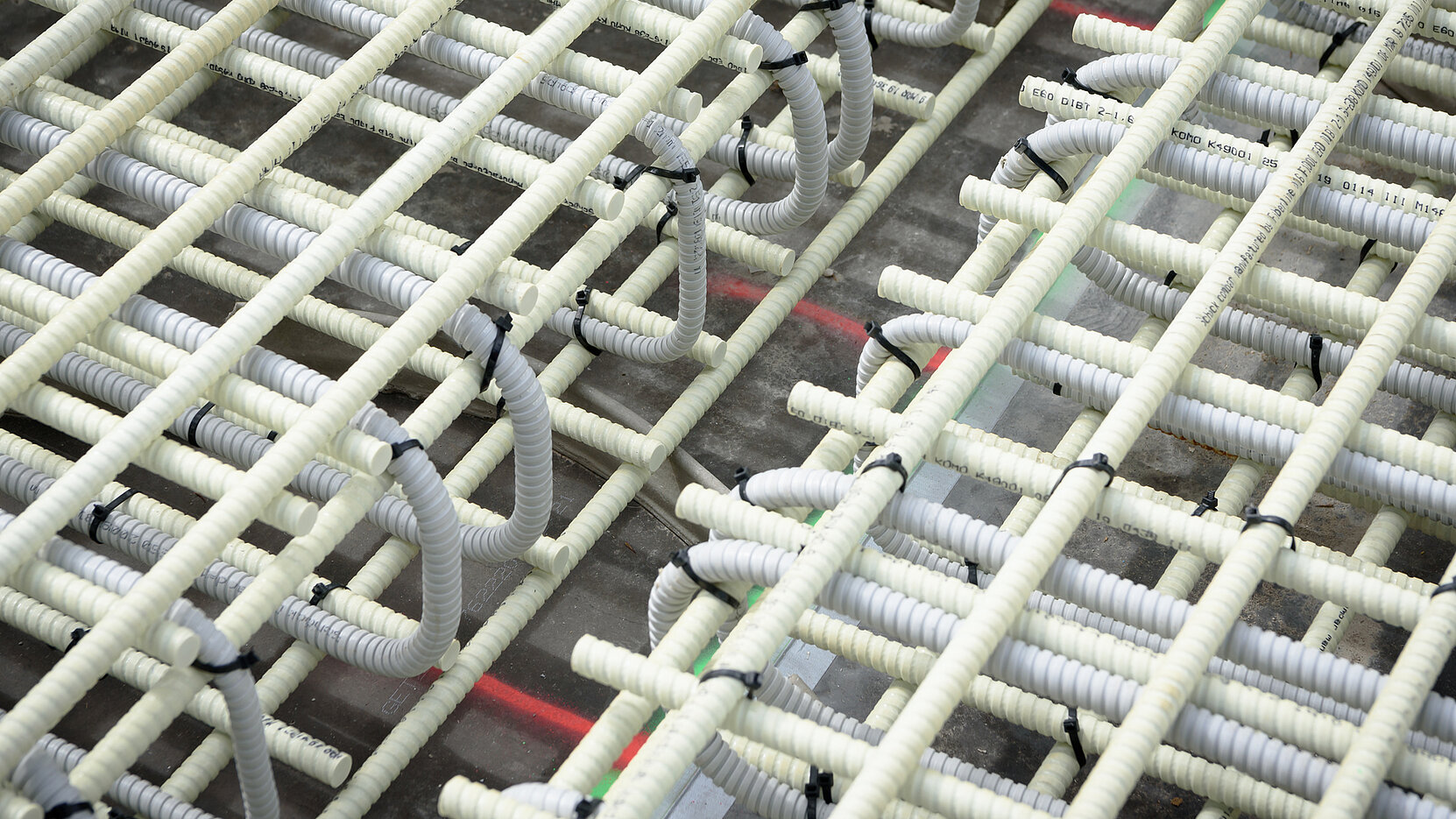
Securing the reinforcement with cable ties. Photo: Moritz Bernoully
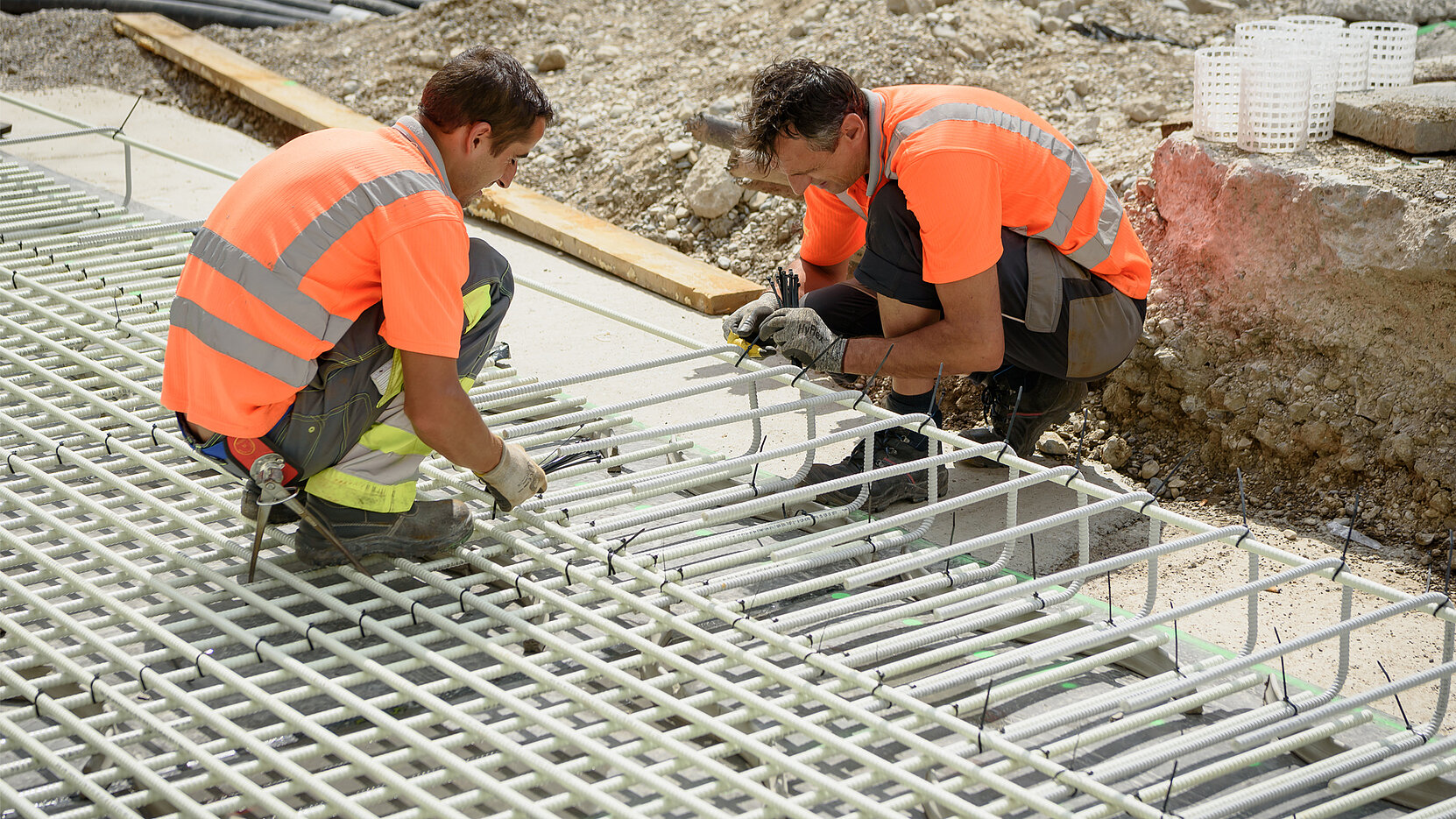
Aligning the longitudinal bars in accordance with the
spacing specified in the reinforcement plan. Photo: Moritz Bernoully
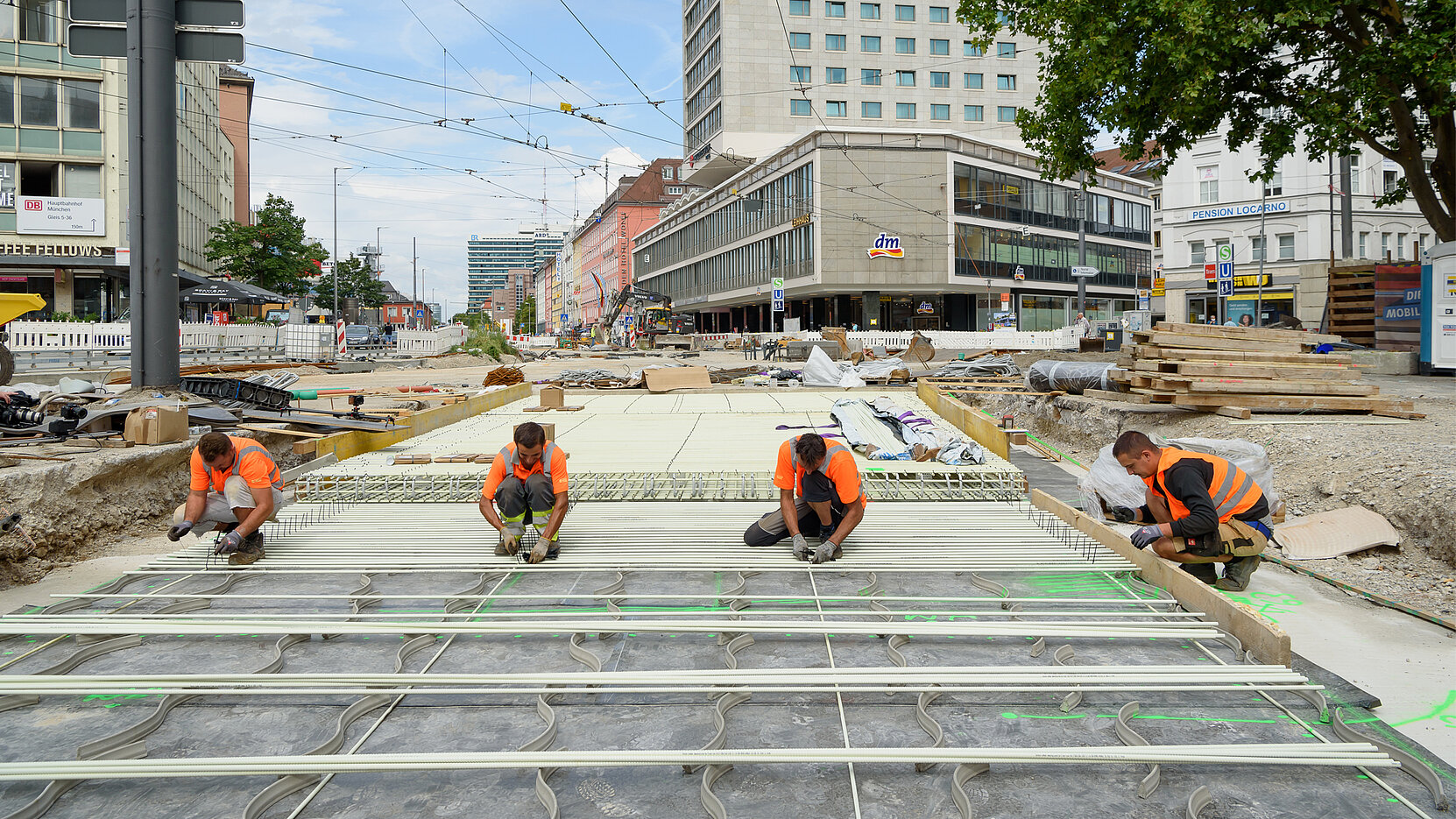
Placing the bent bars. Photo: Moritz Bernoully
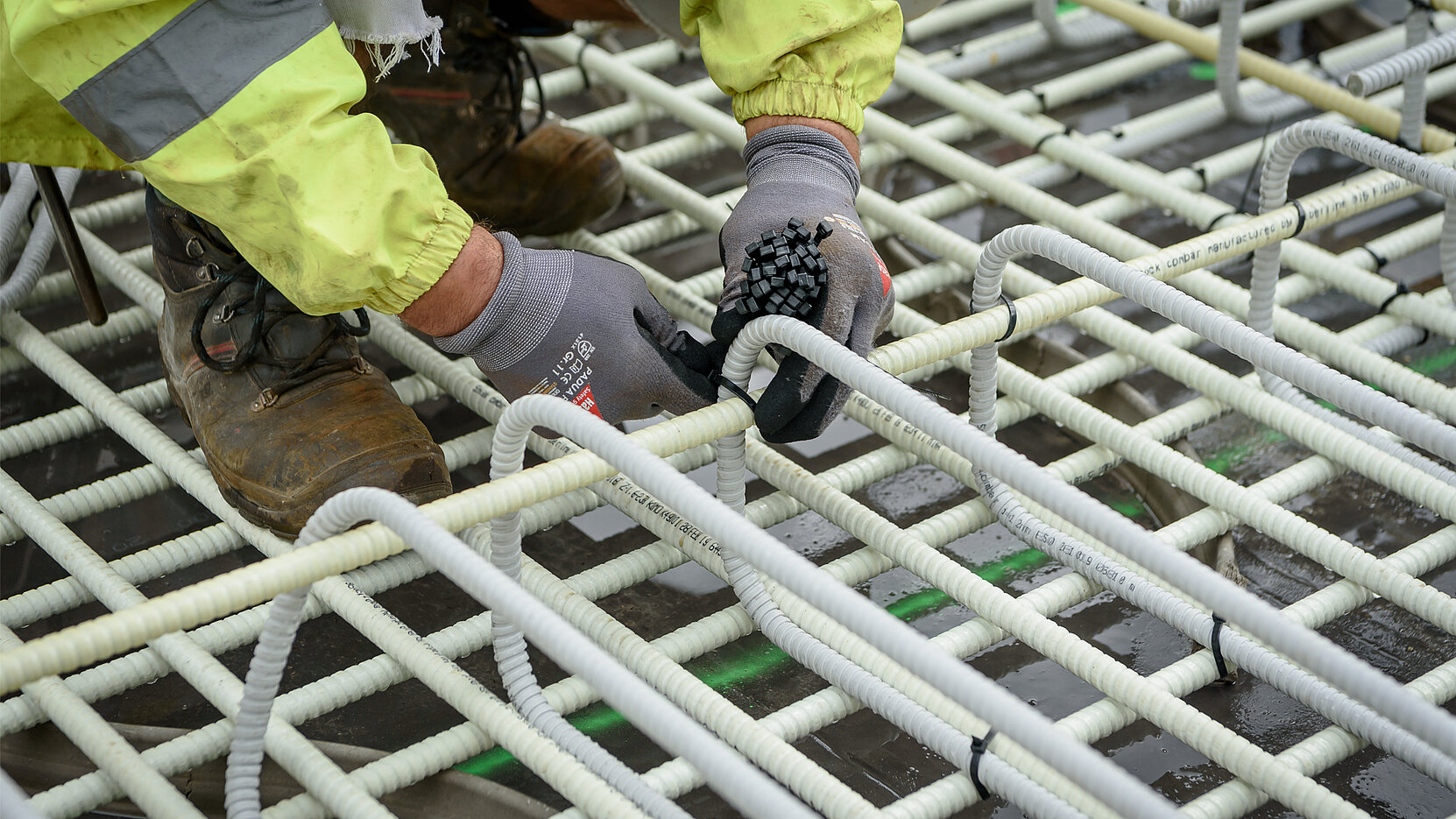
Securing them to the straight bars. Photo: Moritz Bernoully
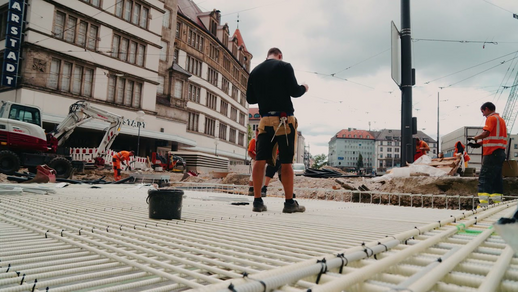
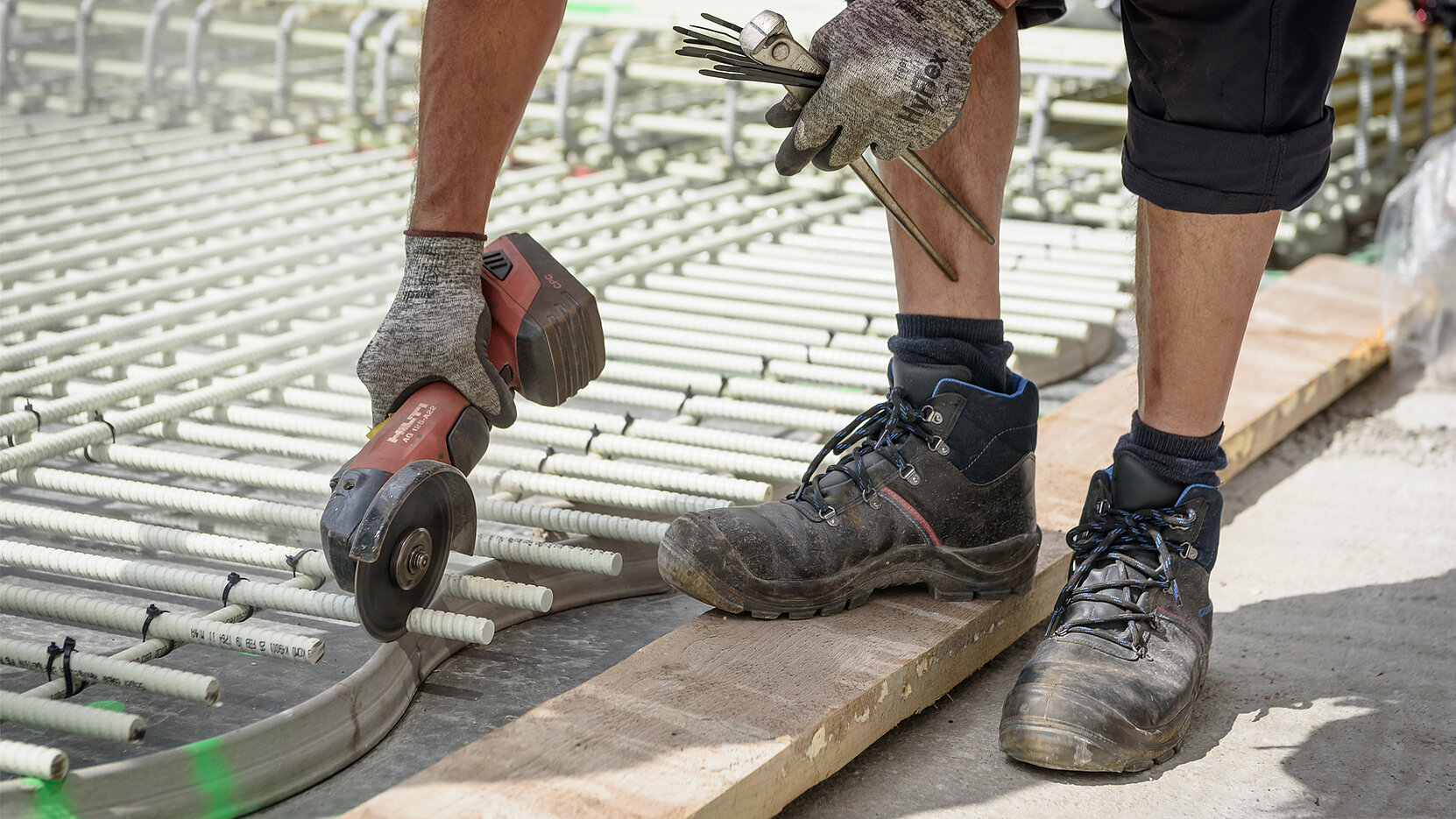
The Combar® reinforcement bars are cut to the correct
length. Photo: Moritz Bernoully
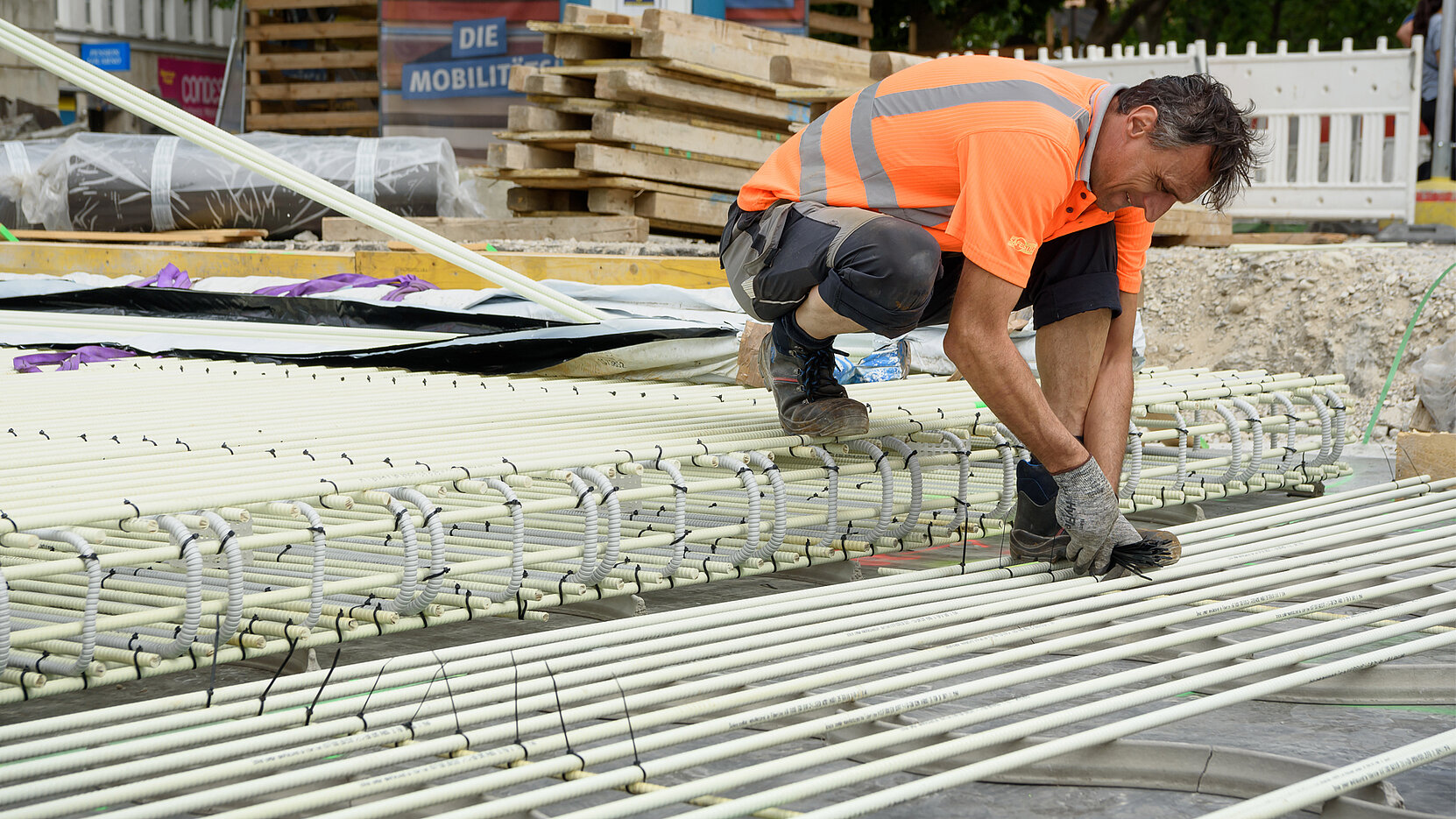
Work on the ‘lower layer’ of the reinforcement. Photo: Moritz Bernoully
The ‘lower layer’ of the reinforcement immediately
prior to completion. Photo: Moritz Bernoully
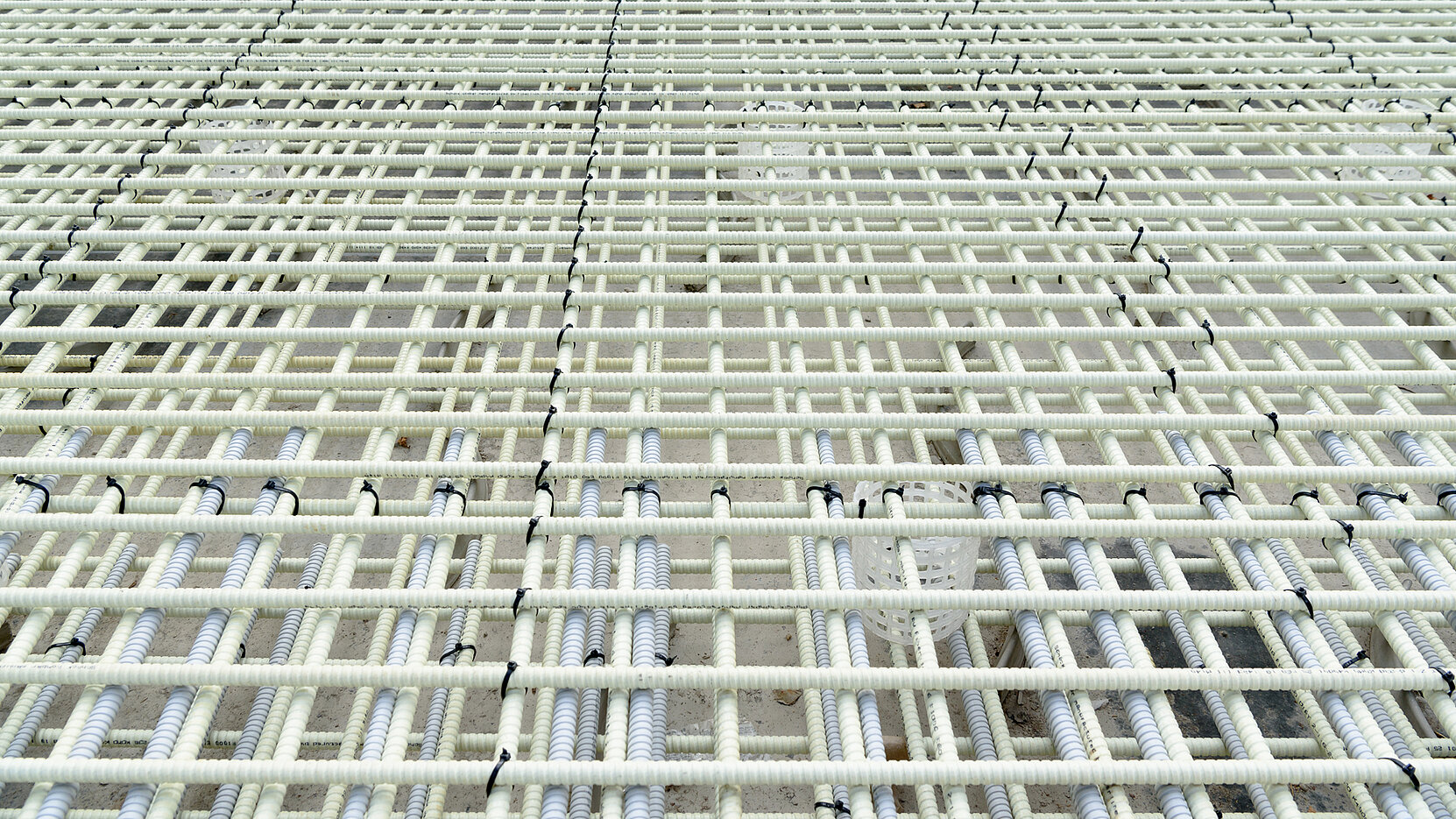
View of a floor slab reinforced with Combar®. Photo: Moritz Bernoully
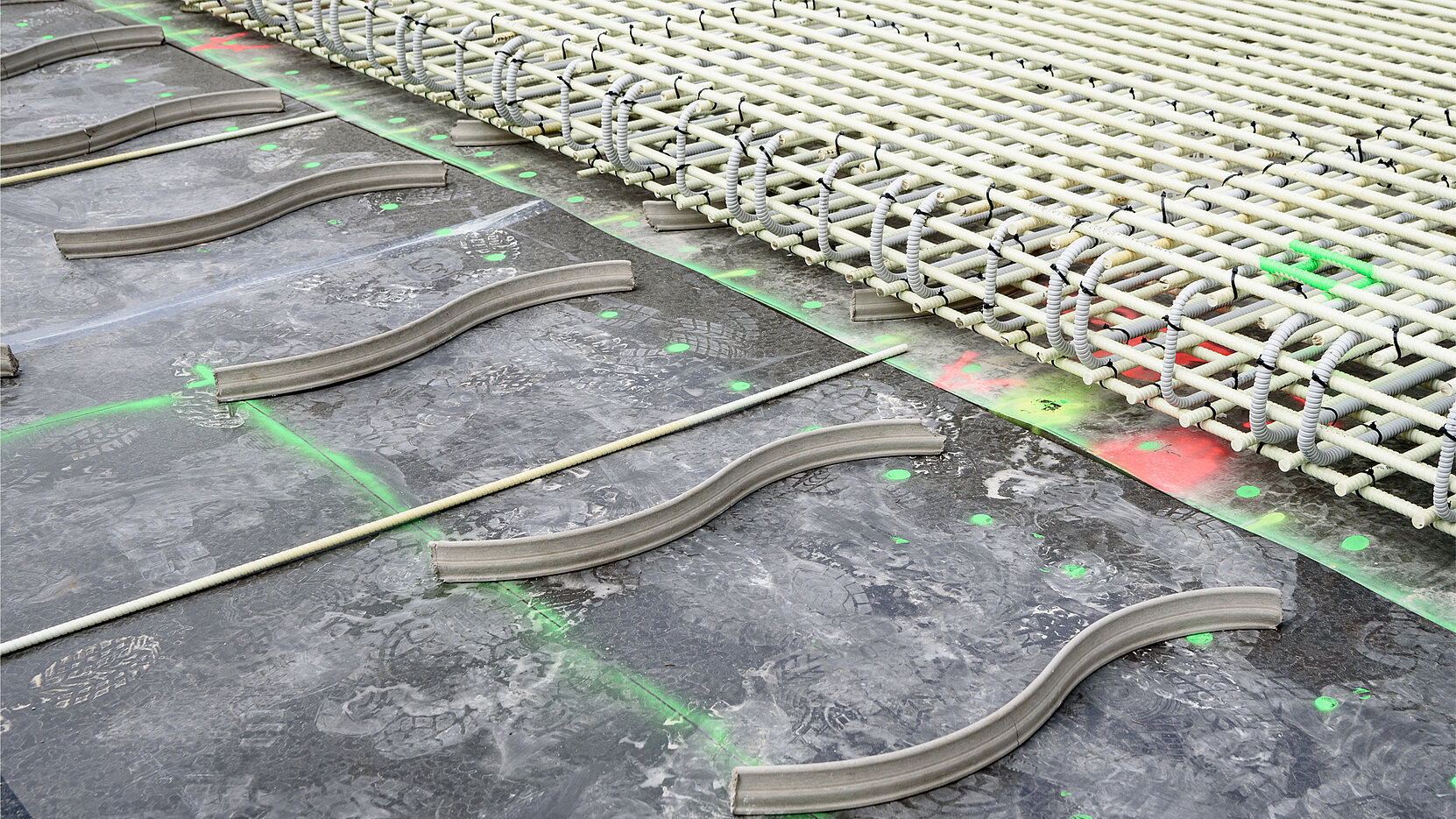
View of a floor slab reinforced with Combar® (detail). Photo: Moritz Bernoully
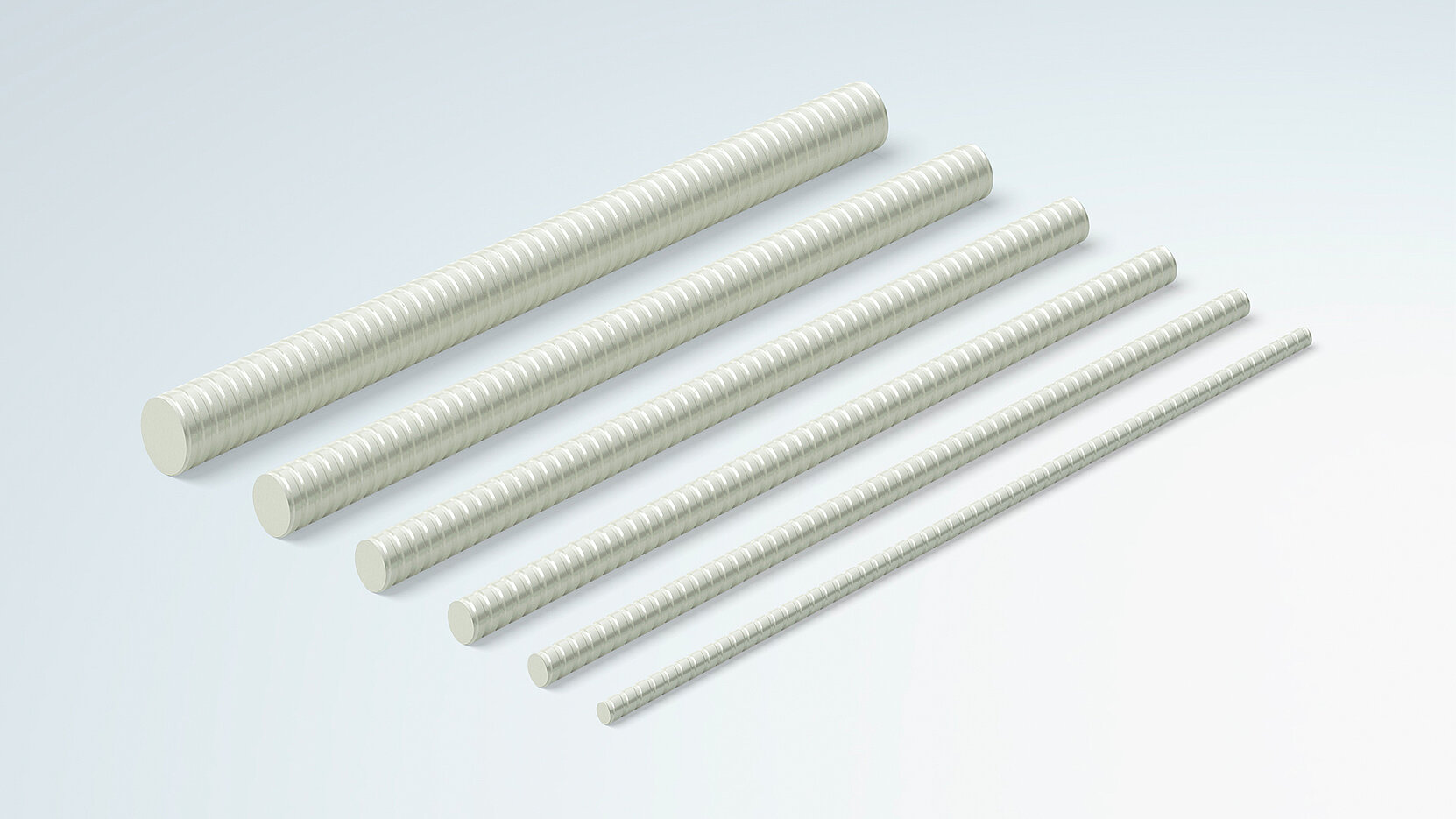
In specialised applications, conventional reinforcing
steel does not meet the specified requirements. In such cases, Schöck Combar®
glass fibre reinforcement opens up new possibilities. Photo: Schöck Bauteile GmbH
Stadtwerke München (SWM) and Münchner Verkehrsgesellschaft (MVG) are investing in the expansion and maintenance of Munich’s tram network. At the main station, the stop on Bahnhofplatz, which currently has two tracks, is being extended to include a third track. To prevent signalling faults, the electrically non-conductive glass fibre composite material Combar® was chosen for the reinforcement of the track slabs.
In the area of the points, electronic point interlocking circuits are used to detect whether and how many tram axles are passing over the points. When a tram enters the points area, the large steel mass of the tram axle alters the resonant circuit, thereby affecting the control of the points. If the track slabs in this area were reinforced with conventional steel reinforcement, the electronics would be affected in a similar way, leading to interference with the points interlocking circuits.
G. Hinteregger & Söhne Baugesellschaft m. b. H.,
Salzburg, Österreich
Stadtwerke München (SWM)
Ingenieurbüro Grassl GmbH, München
Videos